Water damage can turn a home into a nightmare faster than you think. A burst pipe, a severe storm, or even a small leak left unchecked can lead to extensive mold growth, compromising your health and property value. In Cleveland, where humid summers and harsh winters exacerbate moisture issues, we’ve seen countless cases at Cleveland Water Damage where initial water intrusion spirals into full-blown mold problems. But understanding the likelihood of mold after water damage empowers you to act swiftly and minimize the damage. This post breaks down the science behind mold proliferation, offers practical prevention tips tailored to our local climate, and highlights pitfalls to avoid. Whether you’re dealing with a recent flood or just want to be prepared, you’ll gain actionable insights to safeguard your space. With over years of experience serving Cleveland residents, we’re here to help you navigate these challenges effectively.
Understanding the Likelihood of Mold After Water Damage
Mold thrives in damp environments, and water damage creates the perfect breeding ground. But how likely is it really? The short answer: highly probable if not addressed promptly. Mold spores are everywhere—in the air, on surfaces—and they need only moisture, warmth, and organic material to grow. After water damage, the risk skyrockets because standing water or high humidity levels provide that moisture.
Let’s break it down. Within 24 to 48 hours of water exposure, mold can begin to colonize. This timeline varies based on factors like the extent of the water damage, temperature, and ventilation. For instance, in a warm, humid Cleveland summer, mold can appear even faster than in cooler months. The EPA notes that porous materials like drywall, carpet, and wood absorb water quickly, becoming ideal hosts. Non-porous surfaces like tile might resist longer, but once moisture seeps in, no surface is safe.
- Type of Water Damage: Clean water from a pipe burst (Category 1) gives mold a foothold slower than gray water from a washing machine overflow (Category 2) or black water from sewage (Category 3), which introduces contaminants that accelerate growth.
- Environmental Factors: Cleveland’s average humidity hovers around 70% in summer, per local weather data, making post-damage drying crucial. Poor airflow in basements—common in older Cleveland homes—traps moisture.
- Extent of Saturation: Surface-level spills might dry out without issue, but flooding that soaks subfloors increases mold odds to near 100% without intervention.
- Previous Issues: Homes with prior leaks or poor insulation, prevalent in neighborhoods like Slavic Village, face higher risks due to lingering dampness.
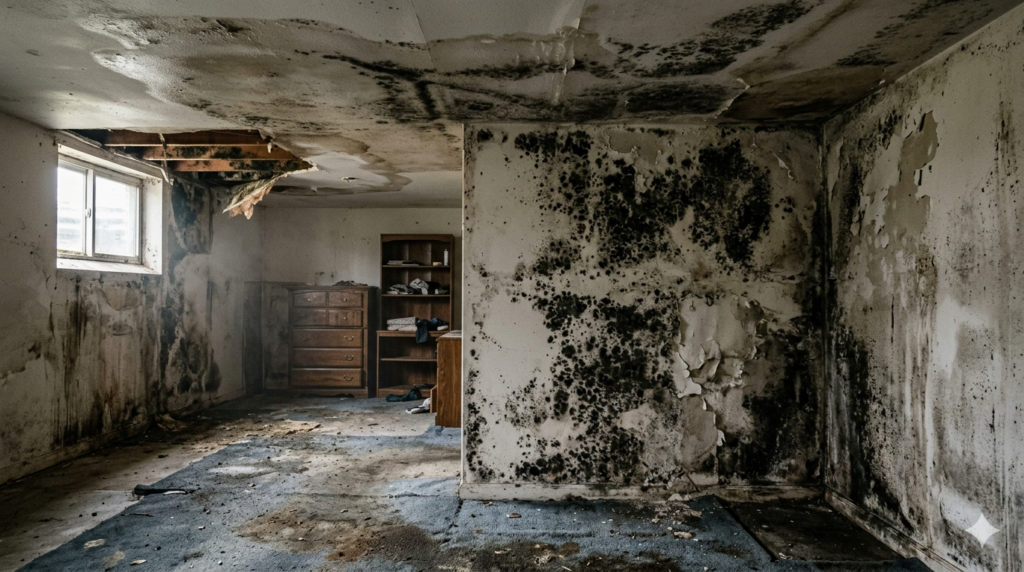
In our experience at Cleveland Water Damage, we’ve responded to hundreds of calls where homeowners underestimated the speed of mold development. One case involved a main water line break in a Buckeye home; within three days, visible mold covered walls because extraction was delayed. Technically, mold growth follows a hyphal expansion phase, where spores germinate and form networks. This isn’t just unsightly—it’s a health hazard, releasing allergens and mycotoxins that can trigger respiratory issues, especially for families with asthma or young children.
To quantify likelihood: Studies from the Institute of Inspection Cleaning and Restoration Certification (IICRC) suggest that 70-80% of untreated water-damaged structures develop significant mold within a week. In Cleveland, our lake-effect weather adds unpredictability; a sudden downpour can compound indoor moisture. Understanding this ‘what’ and ‘why’ is key—mold isn’t inevitable, but ignoring water damage makes it almost certain. By recognizing these elements, you can prioritize drying and dehumidification to tip the odds in your favor.
Practical Tips to Prevent Mold After Water Damage
Acting fast is your best defense against mold after water damage. Start by stopping the source—shut off water if possible—and then focus on extraction and drying. For Cleveland homeowners, our variable climate means you can’t rely on natural evaporation alone; professional tools are often necessary.
Here’s a step-by-step guide:
-
Assess and Extract Water Immediately: Remove standing water using wet vacuums or pumps. In areas like Lorain Denison, where older plumbing is common, check for hidden leaks behind walls.
-
Ventilate and Dehumidify: Open windows if safe, but use industrial fans and dehumidifiers to pull moisture from the air. Aim for under 50% humidity; Cleveland’s muggy springs demand high-capacity units.
-
Remove Affected Materials: Cut out saturated drywall (at least 12 inches above the water line) and discard wet carpet padding. For valuables, consider document drying and restoration services to save irreplaceable items.
-
Clean and Disinfect: Use EPA-approved antimicrobial cleaners on surfaces. Avoid bleach on porous materials—it doesn’t penetrate.
- Monitor with Tools: Invest in a moisture meter (under $50) to check levels; readings above 15-20% signal ongoing risk.
Local factors play a big role in Cleveland. Our freeze-thaw cycles can crack foundations, leading to seepage, while Lake Erie’s influence keeps indoor humidity elevated year-round. Ohio building codes require proper ventilation in basements, but many pre-1980s homes in Bailey lack it, heightening mold vulnerability. If a storm hits, opt for emergency storm cleanup to handle debris and water swiftly.
Pro Tip: An insider secret from our team: After drying, apply a borate-based mold inhibitor to wood framing—it’s non-toxic and prevents spore germination for years. This is especially useful in Cleveland’s damp basements, where standard treatments fall short.
These steps reduce mold likelihood dramatically. Regular maintenance, like inspecting gutters and seals before winter, further protects against water intrusion. By following this how-to, you’ll not only prevent mold but also comply with local regulations, avoiding fines or insurance denials.
Common Mistakes to Avoid When Dealing with Water Damage and Mold Risk
Homeowners often make errors that turn minor water issues into major mold disasters, costing thousands in repairs and health bills. One big mistake: Delaying action. Thinking ‘it’ll dry on its own’ ignores how mold spores activate in as little as 24 hours. In Cleveland, where humidity lingers, this delay can lead to widespread growth, requiring full-room gutting—financially devastating, with average remediation costs hitting $2,000-$6,000 per incident.
Another pitfall: DIY drying without proper equipment. Fans alone circulate moist air, worsening the problem. We’ve seen cases where incomplete drying led to hidden mold in HVAC systems, spreading spores throughout the home and posing severe respiratory risks, particularly to vulnerable groups like the elderly.
Ignoring hidden damage is common too. Water wicks up walls invisibly, so skipping structural engineering inspections means missing compromised beams or insulation. Safety-wise, this weakens your home’s integrity; financially, undetected mold can slash property value by 20-30% during sales.
Finally, using incorrect cleaners—like straight bleach—kills surface mold but leaves roots intact, allowing regrowth. In Cleveland’s variable weather, this rebounds quickly, leading to repeated treatments and escalating health concerns from ongoing exposure.
Avoid these by calling pros early. The risks aren’t just monetary; chronic mold exposure links to allergies, infections, and even neurological issues per CDC reports. Prioritizing correct response saves lives and livelihoods.
Conclusion
Water damage doesn’t have to lead to mold—knowledge of the high likelihood within 48 hours, combined with swift extraction, drying, and monitoring, can prevent it. Key takeaways: Act fast, use proper tools, consider local Cleveland factors like humidity, and steer clear of delays or inadequate fixes. These steps protect your health, home, and wallet.
If tackling this alone feels overwhelming, Cleveland Water Damage is your trusted local partner. With expertise in everything from initial response to full restoration, we’ve helped countless Cleveland families recover safely. For peace of mind, let our certified team handle the heavy lifting.
Need help with how likely is mold after water damage? in Cleveland? Call Cleveland Water Damage today at (216) 584-3433.
Leave a Reply