
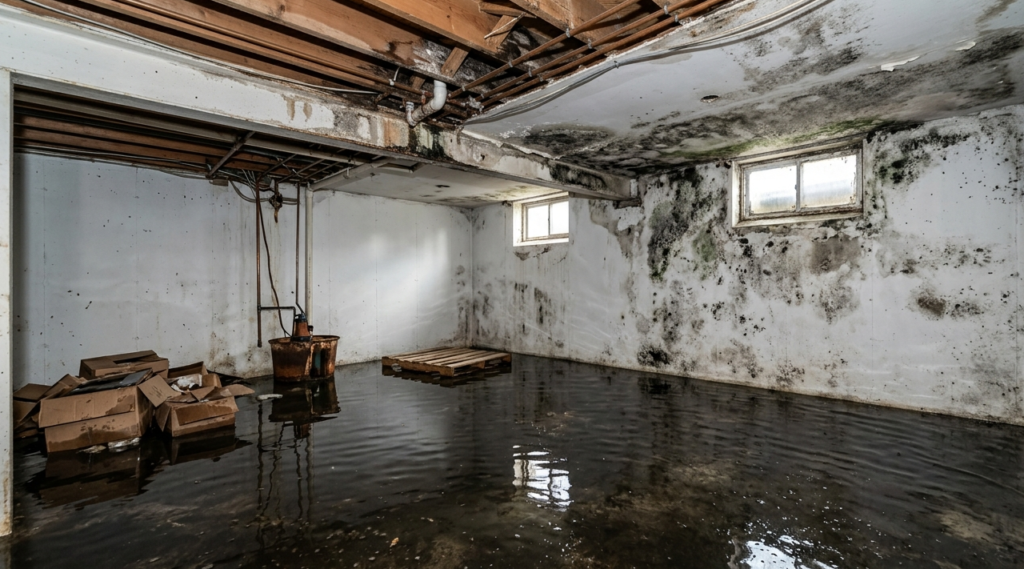
A flooded basement in Cleveland can strike without warning, turning your home into a chaotic mess of water, debris, and potential health hazards. Whether caused by heavy rains, burst pipes, or sewer backups, the damage spreads quickly and can lead to structural issues and mold growth if not addressed properly. Homeowners often feel overwhelmed, unsure of the first steps to take safely. At Cleveland Water Damage, we have seen this issue frequently in Cleveland, where older homes and unpredictable weather make basements especially vulnerable. This guide provides clear, actionable steps for basement flood cleanup so you can protect your property and family effectively.
Understanding Basement Flood Cleanup in Cleveland
Basement flooding happens when water enters below ground level, often due to poor drainage or extreme weather common in Northeast Ohio. The “what” involves standing water that saturates floors, walls, and belongings, while the “why” stems from hydrostatic pressure pushing water through foundations. Breaking it down simply, water damage restoration focuses on extraction, drying, and sanitization to prevent secondary issues like mold.
In our experience at Cleveland Water Damage, many Cleveland properties suffer repeated flooding because of outdated sump pumps or clogged gutters. Key factors include:
- Water source identification: Distinguish between clean, gray, or black water for proper handling.
- Moisture mapping: Use tools to find hidden dampness in walls and floors.
- Health risks: Bacteria and mold thrive in wet environments, posing respiratory threats.
Local housing types like older brick homes in areas such as Irishtown Bend amplify these challenges due to aging infrastructure.
Practical Tips for Effective Cleanup
Start by ensuring safety: turn off electricity and wear protective gear before entering. Pump out water using submersible pumps, then remove wet materials like carpets. For drying, industrial fans and dehumidifiers are essential in Cleveland’s humid climate.
Local factors matter—Cleveland’s freeze-thaw cycles can worsen cracks in foundations, so inspect regularly. Regulations require proper disposal of contaminated materials to avoid fines.
Pro Tip: Always test for hidden mold early, as it can spread behind walls; consider professional black mold remediation and removal if odors persist.
Additional steps include documenting everything for insurance and ventilating the space safely.
Common Mistakes to Avoid
Homeowners often skip professional assessment, leading to incomplete drying and costly mold outbreaks later. Using household fans alone fails in large basements, risking structural rot. Another error is delaying cleanup, which allows bacteria to multiply and inflates repair bills. In Cleveland, ignoring local weather patterns like lake-effect snow can cause repeat flooding. These mistakes not only endanger health but also reduce property value significantly.
Conclusion
Effective basement flood cleanup requires quick, informed action to restore safety and prevent long-term damage. By following these steps, you can minimize risks and costs. If you prefer a professional solution, Cleveland Water Damage offers expert services tailored to Cleveland homes. Need help with Basement Flood Cleanup in Cleveland — What to Do When Your Basement Floods in Cleveland? Call Cleveland Water Damage today at (216) 584-3433.
Leave a Reply