Water damage can strike University Heights homes without warning. Heavy rains, aging pipes, and unexpected appliance leaks routinely send homeowners searching for water damage repair near me – and for good reason. Left unaddressed even briefly, moisture intrusion causes structural rot, hazardous mold, and insurance headaches that multiply costs. Cleveland Water Damage has helped families throughout this Cleveland suburb restore their properties safely, and this guide distills what we have learned on the job into practical, locally relevant advice.
Why University Heights Homes Are Especially Vulnerable
University Heights sits within Greater Cleveland, where the combination of older housing stock – much of it built before 1960 – and the region’s punishing freeze-thaw cycle creates a perfect environment for water infiltration. Homeowners dealing with water damage in Cleveland Ohio consistently report the same root causes: deteriorating pipe joints, cracked foundation walls, and rooflines that cannot shed heavy snowmelt fast enough. Understanding the local pattern is the first step toward getting ahead of the problem rather than constantly reacting to it.
- Heavy rainfall overwhelms aging clay sewer lines, triggering basement flooding that demands immediate basement flood cleanup in Cleveland before secondary mold sets in.
- Frozen pipes are the leading cause of sudden water removal calls across Cleveland Ohio every January and February – a burst pipe can release hundreds of gallons before a homeowner notices.
- Appliance failures (washing machines, water heaters, dishwashers) account for a significant share of water cleanup jobs, especially in homes where rubber supply hoses have never been replaced.
- Roof damage from ice dams allows meltwater to penetrate attic insulation and travel silently down interior wall cavities, making detection difficult without moisture meters.
In our experience at Cleveland Water Damage, many University Heights homeowners overlook early warning signs – a musty odor in the basement, a soft spot in drywall, efflorescence on the foundation wall – until what started as a minor issue requires full water damage restoration in Cleveland Ohio. Catching these signals early is the most cost-effective thing you can do.
Step-by-Step Water Damage Repair for Cleveland-Area Homeowners
Whether you are handling a small leak yourself or coordinating with a water restoration company in Cleveland Ohio, following the correct sequence prevents compounding damage and protects your insurance claim.
1. Stop the Source Immediately
Locate and shut off the water supply feeding the affected area. For a burst pipe this means the main shutoff; for appliance overflows, pull the machine away from the wall and close the supply valve behind it. Do not re-enter flooded areas if there is any risk of contact with live electrical circuits – water and electricity together are a life-threatening combination.
2. Perform Water Removal Without Delay
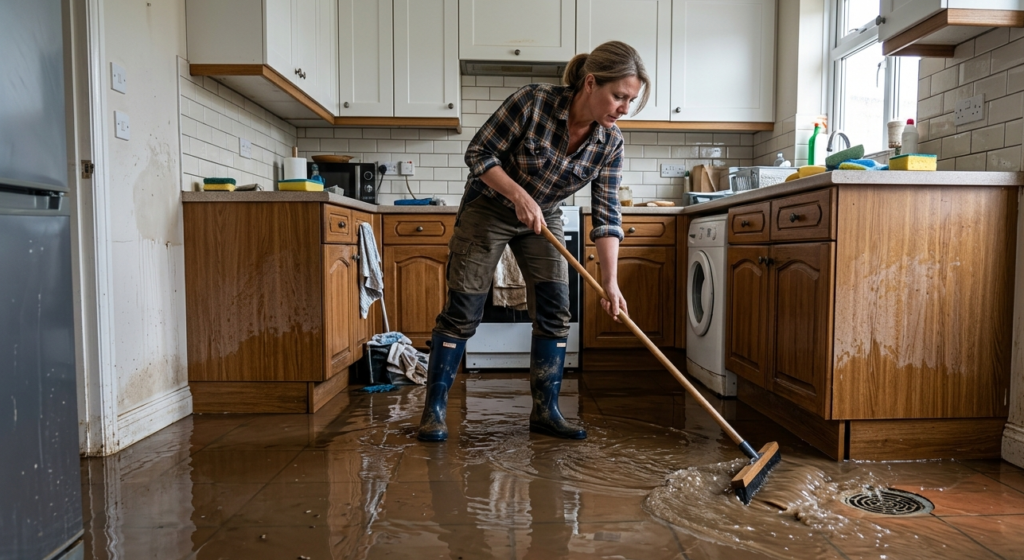
Speed is critical during water removal in Ohio City and throughout the Cleveland area. Standing water that sits longer than 24–48 hours dramatically accelerates mold colonization. Use a submersible pump for significant basement flooding, followed by a wet-dry vacuum to capture shallow pools and saturated carpet padding. Bag and dispose of porous materials – carpet, ceiling tiles, insulation – that absorbed contaminated water, following Cuyahoga County guidelines for disposal of Category 2 or Category 3 material.
3. Begin Water Mitigation and Structural Drying
Water mitigation in Ohio City and neighboring suburbs like University Heights requires more than running a box fan for a few days. Professional-grade dehumidifiers draw out moisture that has migrated into wall cavities, subfloor assemblies, and concrete block foundations. Place units strategically based on psychrometric readings – not just in the obvious wet spots – and monitor moisture levels daily until you reach ambient equilibrium. Cleveland’s humid summers slow drying significantly compared to arid climates; plan for at least three to five days of active drying for most residential losses.
4. Inspect for Hidden Moisture and Mold Risk
A calibrated moisture meter is non-negotiable. Surface dryness is misleading – wood framing can appear dry to the touch while reading 25–30% moisture content internally, well above the 19% threshold at which mold growth becomes likely. Pay particular attention to the bottom plate of stud walls, the rim joist area in basements, and any place where water cleanup revealed staining. If you detect musty odors or visible black spotting, pause restoration work and arrange a mold assessment before enclosing walls.
5. Repair, Rebuild, and Prevent Recurrence
Once moisture readings confirm the structure is dry, address the root cause before closing walls. Cleveland water damage repair often requires attention to drainage grading, downspout extensions, sump pump capacity, or pipe insulation depending on the original failure point. Rebuilding without fixing the source is one of the most expensive mistakes homeowners make – it virtually guarantees the same call within a few seasons.
Pro Tip: Always document damage with photos and video before beginning water cleanup. A complete photographic record taken before any water removal is your strongest asset when filing a homeowner’s insurance claim or disputing a coverage denial. Date-stamp every image and keep copies offsite.
Water Damage Ohio City and Neighboring Cleveland Suburbs: Shared Challenges
University Heights sits just east of Ohio City, and the two communities share much of the same infrastructure age, soil conditions, and weather exposure. Homeowners dealing with flood damage in Ohio City face the same clay sewer lateral failures that plague University Heights basements, and the same water restoration strategies apply across both neighborhoods. For complex plumbing overflow situations – backed-up sewage lines, failed ejector pumps, or fixture overflows – professional assessment is strongly recommended before attempting to dry the space, because Category 3 contamination requires a different cleanup protocol than clean water losses.
Homeowners in nearby Forest Hills can review our area-specific guidance. For plumbing overflow cleanup, visit our dedicated service page.
Common Mistakes That Turn Manageable Water Damage Into Major Repairs
After responding to hundreds of water damage service calls in Cleveland and the surrounding suburbs, we have seen the same avoidable errors repeatedly. Each one increases both cost and health risk.
- Relying on household fans alone. Fans move air but do not reduce humidity. Without a commercial dehumidifier, moisture simply relocates rather than being removed – walls may feel dry while framing stays saturated.
- Skipping the moisture meter. Surface drying is not structural drying. Many basement flooding repair jobs in Cleveland get re-opened two months later because hidden moisture was never confirmed out.
- Ignoring contamination classification. Water from a toilet overflow or backed sewer line is not the same as a clean supply line break. Treating Category 3 losses with Category 1 cleanup methods voids remediation and poses serious health risks.
- Delaying the insurance call. Most homeowner policies require prompt notification. Waiting too long – or beginning major demolition before an adjuster can inspect – can result in partial or full claim denial.
- Improper disposal of contaminated materials. Cuyahoga County has specific requirements for waste from sewage-affected losses. Improper disposal creates legal liability and potential fines on top of an already stressful situation.
Choosing a Water Restoration Company in Cleveland Ohio
Not every water restoration company in Ohio City or across the Cleveland area operates to the same standard. When evaluating contractors, prioritize the following:
- IICRC S500 certification for water damage restoration = the industry standard for extraction, drying, and decontamination procedures.
- Thermal imaging and professional moisture metering – verbal estimates without instrumentation are a red flag for companies cutting corners.
- Clear documentation practices – written scope of work, moisture logs, and photographic records before and after drying are standard on any legitimate job.
- Local presence and verifiable reviews – a company with a physical address in the Cleveland Ohio area and reviews on Google is easier to hold accountable than a national franchise with local subcontractors.
Cleveland Water Damage meets all of these standards and has been handling basement flood cleanup in Cleveland and throughout Cuyahoga County for years. We document every job in writing, provide moisture logs to homeowners, and work directly with all major insurance carriers.
Conclusion: Protect Your University Heights Home Before the Next Event
Effective water damage repair in University Heights starts with fast identification, proper water removal, and thorough structural drying – in that order. Whether you are facing basement flooding from a heavy storm, a frozen pipe burst mid-winter, or a slow leak that has silently compromised your drywall, the principles are the same: act fast, dry completely, and fix the root cause.
If the scope is beyond a DIY fix – or if you simply want the confidence that comes with professional water cleanup, verified drying data, and insurance-ready documentation – Cleveland Water Damage is ready to help. We serve University Heights, Ohio City, Forest Hills, and communities throughout the Greater Cleveland area.
Need Water Damage Repair in University Heights or Anywhere in the Cleveland Area?
Call Cleveland Water Damage today at (216) 584-3433 – we respond 24/7 to water cleanup emergencies across Cleveland, Ohio City, and all of Cuyahoga County.
Leave a Reply