
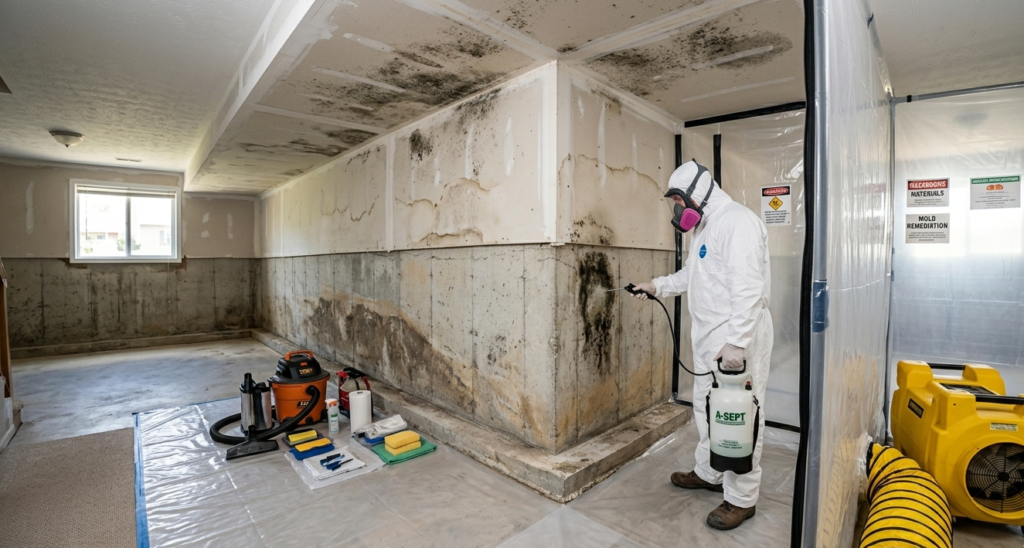
Black Mold Remediation and Removal in Cleveland, OH
Finding dark spots on a wall, noticing a persistent musty odor, or discovering mold after a water leak can be concerning for any property owner. Cleveland Water Damage provides black mold remediation and removal services in Cleveland, OH, for homes experiencing visible mold growth or moisture-related damage. Our approach focuses on evaluating the affected areas, addressing the conditions that support mold growth, and determining which materials need cleaning or removal. If you suspect mold in your home, call (216) 584-3433 to discuss your concerns and the next steps.
Professional Mold Remediation in Cleveland, Ohio
Mold remediation involves more than wiping away visible growth. Mold can develop when moisture remains in drywall, flooring, insulation, wood, or other building materials. A plumbing leak, basement flooding, roof leak, or ongoing humidity problem may allow growth to develop in places that are difficult to see.
Our mold remediation process begins with understanding the extent of the problem and looking for possible moisture sources. When water damage is involved, our water damage inspection service can help assess affected areas and identify signs of lingering moisture. This helps establish whether additional drying or water damage restoration work may be needed alongside mold cleanup.
Black Mold Removal: What Property Owners Should Know
Black mold is a common term used for dark-colored mold growth, but appearance alone cannot confirm the exact type of mold present. Mold of different types can appear black, green, gray, or brown, so it is important not to make assumptions based only on color.
If you find dark growth on basement walls, ceilings, window areas, or other surfaces, avoid disturbing it unnecessarily. Scrubbing or removing affected materials without appropriate precautions can spread mold-containing dust and debris. A professional assessment can help determine the affected area, the condition of the materials, and the appropriate remediation approach.
Our goal is to help property owners understand the scope of the mold problem and address the moisture conditions contributing to it. When mold appears after flooding or a plumbing failure, resolving the underlying water damage is an important part of the overall plan.
Common Causes of Mold Damage in Cleveland Homes
Mold can develop in several areas of a home when moisture is not removed promptly. Basements may be affected by water entering through foundation areas or by a sump pump problem. Bathrooms and kitchens can develop moisture issues around plumbing fixtures, while ceilings and walls may become damp after a pipe or roof leak.
Hidden leaks deserve particular attention because water can travel behind walls or beneath flooring before obvious damage appears. If you suspect a leak is contributing to mold growth, our leak detection services can help address the water-related side of the problem.
Previous flooding can also leave moisture trapped in structural materials. In these situations, our moisture mapping service can help identify areas that may remain damp even when surfaces appear dry.
Our Mold Damage Cleanup and Remediation Process
Every mold situation is different. The right response depends on the size of the affected area, the materials involved, the source of moisture, and whether the growth may extend beyond the visible surface. A careful process helps determine what needs to be cleaned, what may need to be removed, and what additional repairs could be necessary.
1. Assess the affected areas
The first step is to review visible mold, musty odors, water stains, and other signs of moisture. The assessment should also consider the history of leaks, flooding, condensation, or previous water damage that could explain why mold developed.
2. Identify and address moisture
Removing mold without addressing the moisture source may allow the problem to return. Depending on the situation, the underlying issue may involve a plumbing leak, water intrusion, or excess humidity. Water-related damage should be evaluated and addressed as part of the remediation plan.
3. Control the affected work area
Where appropriate for the size and location of the problem, the affected area may need containment and other precautions to limit the spread of mold-containing debris during cleanup. The work methods should be suited to the materials involved and the extent of the growth.
4. Clean or remove affected materials
Some nonporous surfaces may be cleaned, while porous materials that are heavily affected or cannot be adequately restored may require removal. The decision depends on the material’s condition and the findings of the assessment rather than the color of the mold alone.
5. Complete necessary drying and restoration
Once the moisture source is addressed, affected areas may require additional drying before repairs can move forward. Our structural drying and dehumidification service can help manage excess moisture in building materials following a water-related incident.
For properties that have experienced broader damage, our water damage restoration service can help address the damage caused by leaks or flooding as part of the recovery process.
Residential Mold Removal for Houses and Apartments
Mold problems can affect many parts of a residence, including basements, laundry rooms, bathrooms, kitchens, bedrooms, and areas around windows. In some cases, the growth is visible on a surface. In others, a persistent musty odor or recurring moisture may indicate that the problem needs further evaluation.
Residential mold removal should take into account the location of the growth, the condition of the surrounding materials, and whether the home has an ongoing water problem. Property owners should avoid painting over mold or covering damp materials before the cause has been addressed. These steps can hide visible signs without correcting the conditions that allowed the growth to develop.
If you have noticed mold following a burst pipe or sudden water leak, prompt attention to the water damage can help prevent the affected area from becoming more extensive.
How to Reduce the Risk of Mold Returning
Preventing recurring mold starts with moisture control. Repair plumbing leaks, address water intrusion, manage indoor humidity, and investigate damp areas before damage spreads. After a water incident, ensure that affected materials are evaluated and dried appropriately rather than relying on surface appearance alone.
Basements and other areas with limited airflow may need extra attention when dampness or condensation keeps returning. Check for water stains, peeling paint, musty odors, and changes in flooring or drywall. If these signs appear repeatedly, investigate the underlying moisture problem instead of treating each occurrence as an isolated cleaning issue.
Black Mold Remediation in Cleveland Neighborhoods
Cleveland Water Damage helps property owners address water-related damage and moisture concerns in Cleveland and surrounding communities. Older homes, finished basements, and properties with previous plumbing or water intrusion issues may require careful evaluation when mold appears.
We serve property owners in areas including Downtown Cleveland and Tremont. If you have discovered mold after a leak, flooding, or another moisture problem, contact us to discuss the condition of your property and possible next steps.
Frequently Asked Questions About Mold Removal in Cleveland
What is the difference between mold removal and mold remediation?
Mold removal generally refers to cleaning or removing affected materials, while mold remediation describes the broader process of assessing the problem, controlling its spread, addressing moisture, and cleaning or removing affected materials as needed.
Can I identify black mold by its color?
No. Dark coloration alone does not establish the type of mold present. An assessment can help determine the extent of visible growth and whether further identification or testing is appropriate.
Can mold grow after water damage?
Yes. Mold can develop when water-damaged materials remain damp. Leaks, flooding, and plumbing failures can create conditions that support growth if the affected areas are not properly addressed and dried.
Will mold return after cleanup?
Mold may return if the moisture source remains unresolved or damp conditions develop again. Proper remediation should consider the cause of the moisture as well as the affected materials.
When should I seek professional mold remediation?
Consider professional help when mold covers a substantial area, keeps returning, may be hidden behind building materials, or appears after significant water damage. Avoid disturbing suspected mold if doing so could spread contaminated dust or debris.
Contact Cleveland Water Damage for Mold Remediation
If you are searching for mold remediation near you, mold removal in Cleveland, or help with black mold concerns, Cleveland Water Damage can discuss the water-related conditions affecting your property. Addressing moisture and evaluating damaged materials are important steps toward resolving a mold problem.
Call (216) 584-3433 to discuss your mold damage concerns and arrange the appropriate next step for your Cleveland, OH, property.
Nearby Cleveland Areas We Serve Black Mold Remediation & Removal Services
Why Choose Us for Black Mold Remediation & Removal in Cleveland, OH?
Licensed & Insured
Fully protected for your peace of mind
Free Estimates
No obligation quotes
5-Star Rated
Top reviews from customers
Same-Day Service
Quick response times
Need Black Mold Remediation & Removal Services?
Contact us today for a free estimate. Our experienced team is ready to help!